
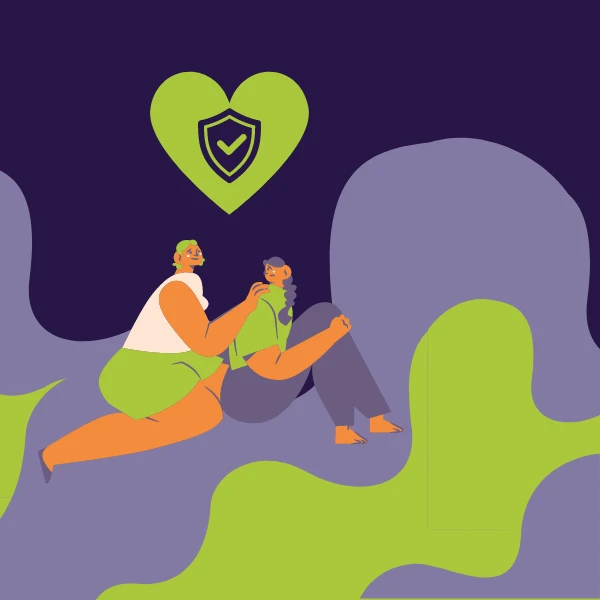
Everyone deserves to feel safe. As January 2024 is the 20th annual National Stalking Awareness Month (NSAM), BARCC is spreading the word about how we can work together to create a world free of stalking. Join us and the Stalking Prevention, Awareness, & Resource Center (SPARC)’s in following these three steps for preventing and addressing stalking: KNOW IT, NAME IT, and STOP IT.
KNOW IT
Stalking is about power and control, restricting the survivor’s autonomy and often causing them to feel unsafe wherever they go. One in three women and one in six men will experience stalking during their lifetime, leaving them vulnerable to other forms of violence as well. For example, stalking survivors are also more likely to experience sexual violence, with one in three stalking survivors being sexually assaulted by their partners.
Survivors of stalking often live in constant fear with no certainty about when and where they are safe. Their lives are disrupted. While stalking is defined as a crime all across the United States, the term can mean different things depending on where you live. But in general, stalking can be described as:
- A pattern of behavior
- Directed at a specific person
- Causing reasonable fear for one’s own or another’s safety, or substantial emotional distress
NAME IT
Is Edward Cullen watching Bella sleep “romantic?” It can be challenging to identify stalking and boundary-breaking behaviors when they are often normalized in the media we consume every day. In reality, stalking can include a wide variety of tactics, including:
- Unwanted phone calls
- Showing up where unwelcome or not invited
- Sending unwanted texts, photos, emails, and direct messages
- Tracking behavior
- Harassing them online
- Sending unwanted gifts
- Finding out information about you through, such as through online searches
In fact, most stalkers use a variety of methods, with unwanted phone calls being the most common method with 75% of stalking survivors experiencing it.
STOP IT
Friends, family, and partners can be vital resources for someone experiencing stalking. Here are five tips for supporting someone you believe is experiencing stalking:
- Believe and validate them. A simple, “I believe you,” can make all the difference to a survivor.
- Focus on the offender’s actions, not the victim’s responses. For example, instead of asking, “Why did you respond to their texts?” say, “It’s not right that they keep texting you.”
- Support them in seeking help. Survivors and their supporters can go to barcc.org/help to learn about BARCC’s services for stalking victims, including:
- Legal Advocacy – Advocates can assist you in learning about legal options and safety measures.
- Case Management – We work directly with survivors and their loved ones to assist with their immediate and long-term needs through safety planning, referrals, and more.
- Counseling – We provide short-term individual, couples, family, and group counseling with licensed clinicians and trained counselors for survivors and their partners, families, and friends.
- Honor their boundaries. A stalker or even their friends and family might come to you asking for information about the survivor. Always make sure to protect the survivor and honor their privacy by not answering their questions.
- You don’t have to do this alone! If you need help supporting someone who is experiencing stalking, you can always call our 24/7 hotline at 800-841-8371 or web chat with us between 9:00 a.m. and 11:00 p.m. every day for guidance and emotional support.


This is a sample multiline comment text with random number: 9487